30-Day Map Challenge / Day 08 / Utopia
A City of Towers
The storeyed stelae of Aksum, Ethiopia, drawn at their true height. Aksum carved skyscrapers it never built.
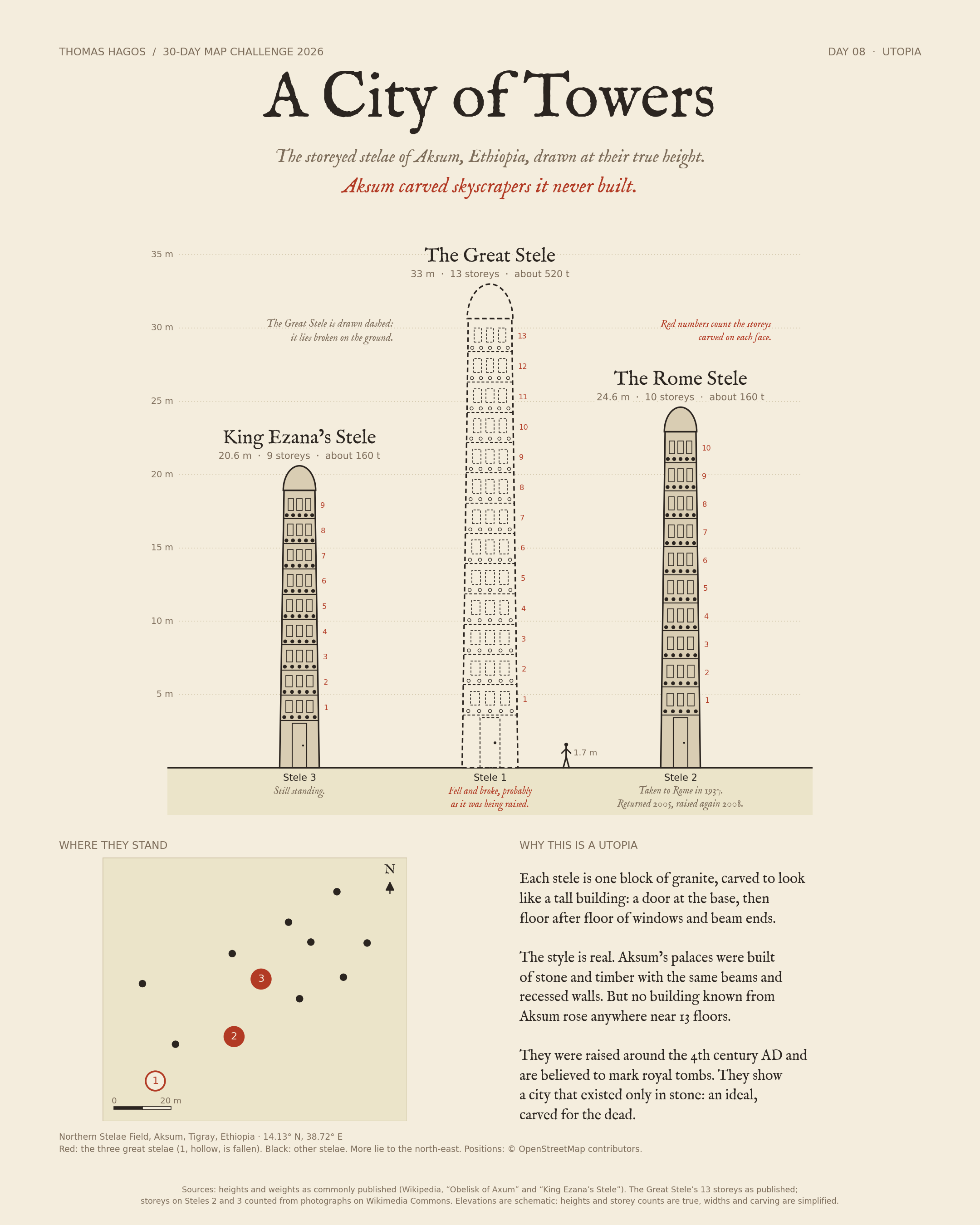
The three great stelae
| Stele 3 · King Ezana’s Stele | 20.6 m | 9 storeys | standing |
| Stele 1 · The Great Stele | 33 m | 13 storeys | fallen |
| Stele 2 · The Rome Stele | 24.6 m | 10 storeys | returned 2005 |
Each stele is a single block of granite carved to look like a tall building: a false door at the base, then floor after floor of windows and the round ends of timber beams. Aksum’s palaces were built in the same style, but no building known from Aksum rose anywhere near thirteen floors. Raised around the 4th century AD and believed to mark royal tombs, the stelae show a city that existed only in stone.
Heights and weights as commonly published (Wikipedia, “Obelisk of Axum” and “King Ezana’s Stele”). The Great Stele’s 13 storeys as published; storeys on Steles 2 and 3 counted from photographs on Wikimedia Commons. Positions © OpenStreetMap contributors (ODbL). Elevations are schematic: heights and storey counts are true, widths and carving simplified. Code and method.